Undergraduates who participate in Students and Learners and Teachers (SaLT), the flagship program of the Teaching and Learning Institute that has inspired pedagogical partnership work around the globe have access to a variety of research and professional development opportunities. Descriptions and selected examples of these opportunities are below. Questions? Contact Alison Cook-Sather at acooksat@brynmawr.edu.
Individual Professional Development

Each undergraduate who participates in Students and Learners and Teachers (SaLT) engages in professional development that shapes their undergraduate experiences and, in many cases, their career trajectories. Through working as paid pedagogical consultants to faculty in whose courses they are not concurrently enrolled, students conduct formal and informal research to inform their partnership practice, often linking this partnership work to their major course work as well as to co-curricular roles and activities. Below is a small sample of the individual professional development experiences of several SaLT student consultants over the last ten years.
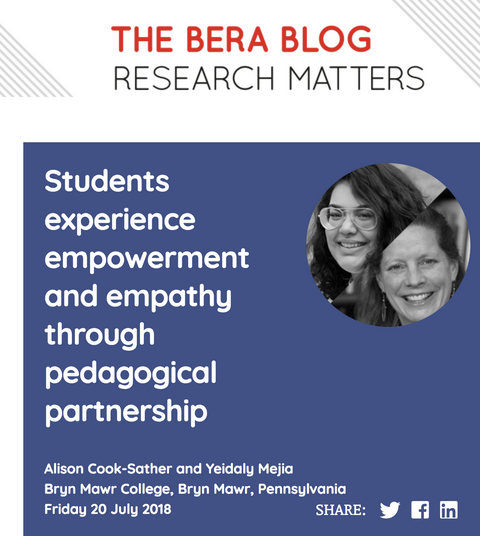
- Sophia Abbot, Bryn Mawr College class of 2015, pictured above, developed a new approach to classroom observations as part of a classroom-focused pedagogical partnership in which she participated, which was informed as well by her independent major in “Educational Identities.”
- Sasha Mathrani, Haverford College class of 2018, drew on her major course work in biology to inform the argument in her co-authored chapter, “Discerning Growth,” and she traced her professional development in an essay called “Building Relationships, Navigating Discomfort and Uncertainty, and Translating My Voice in New Contexts,” published in Teaching and Learning Together in Higher Education.
- Mary Cott, Haverford College class of 2021, analyzed the pedagogical partnership work she experienced as a form of professional development in “Pedagogical Partnership as Professional Development for Students,” a chapter she co-authored for inclusion in The Bloomsbury Handbook of Student Voice in Higher Education, and in “Tracing the arc of my pedagogical partnerships: Guided by a commitment to community,” an essay published in International Journal for Students as Partners.
- Kayo Stewart, Bryn Mawr College class of 2023, drew on her experience as a SaLT student consultant and on her research for her senior thesis in sociology to inform her career plans, as she describes in “From Student Consulting at My Liberal Arts Institution to Applying to Law School,” an essay published in Teaching and Learning Together in Higher Education.
Collaborative Program Design
Through Students and Learners and Teachers (SaLT), undergraduates have opportunities to work in collaboration with faculty and staff to develop projects and programs. Examples:
- Making extra-classroom student-faculty pedagogical partnership more accessible— led by Dante Nguyen, Haverford College class of 2025, in partnership with Alison Cook-Sather, director of SaLT, and Christina Rose, director of the Chesick Scholars Program. This IRB-approved project took a students-as-co-researchers approach to a three-phase action-research effort to (a) assess the benefits of pedagogical partnership, (b) conceptualize a new approach to fostering those benefits, and (c) pilot that approach could inform efforts at our own and other institutions to pursue social-justice goals in higher education. Read more in the article below.
- Cook-Sather, A., Nguyen, E.D., & Suresh, A. (2025). Developing an inclusive, student-led approach to scaling up the benefits of pedagogical partnership for social justice in higher education . Social Sciences 14(79). 10.3390/socsci14020079
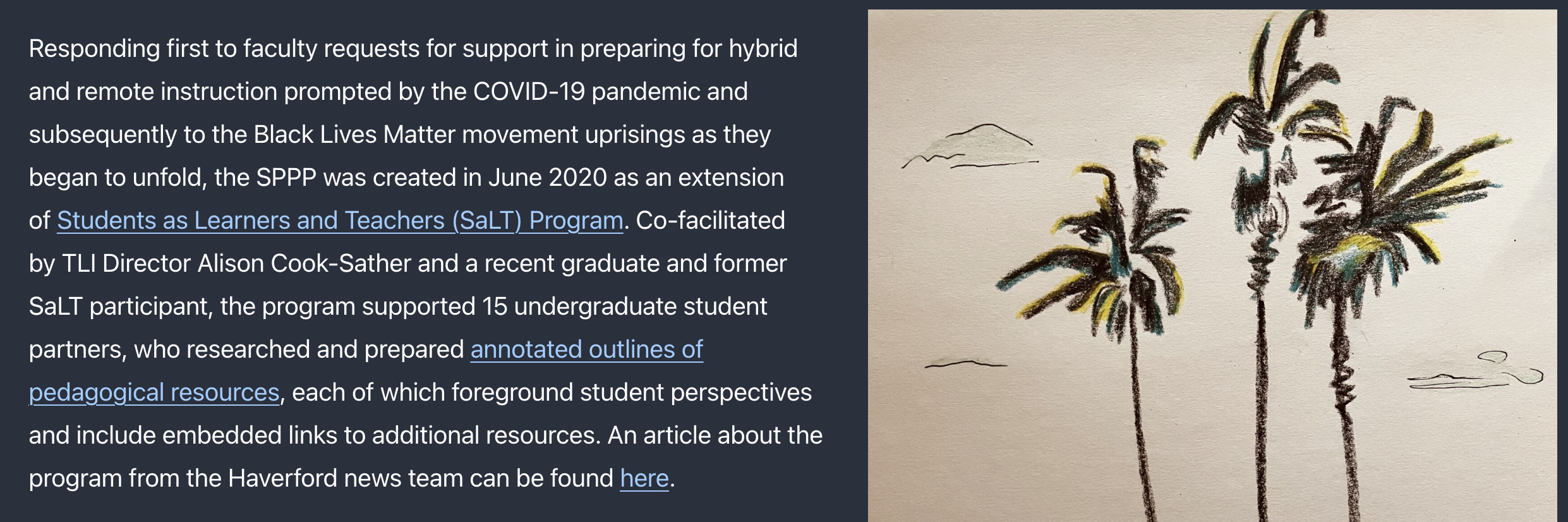
- Summer Pedagogical Partnership Program — featured in the picture above and co-created by Alison Cook-Sather and several SaLT student consultants in 2020 at the intersection of the COVID-19 pandemic and the Black Lives Matter uprisings. This project aimed to support faculty in developing capacity to teach online and to support international students who could not travel home during this time. Read more in the articles below.
- Ameyaa, R. A., Cook-Sather, A., Ramo, K., & Tohfa, H. (2021). Undergraduate students partnering with faculty to develop trauma-informed, anti-racist pedagogical approaches: Intersecting experiences of three student partners. Journal of Innovation, Partnership and Change, 7, 1.
- Cook-Sather, A., & Bala, N. (2022). When distance deepens connections: How intercollegiate partnership programs support empathetic, engaged, and equitable teaching approaches. Student Engagement in Higher Education Journal, 4(2), 128–145.
Presentations at Conferences
Undergraduates who work as student consultants through Students as Learners and Teachers (SaLT) have opportunities during and after their college years to present at conferences in the Unites States and in other countries. Examples:
- Aaniyah Alexander, Bryn Mawr College class of 2025, co-presented with Alison Cook-Sather at the 2024 conference of the Professional and Organizational Development (POD) network on “The Enduring Benefits of Pedagogical Partnership.”
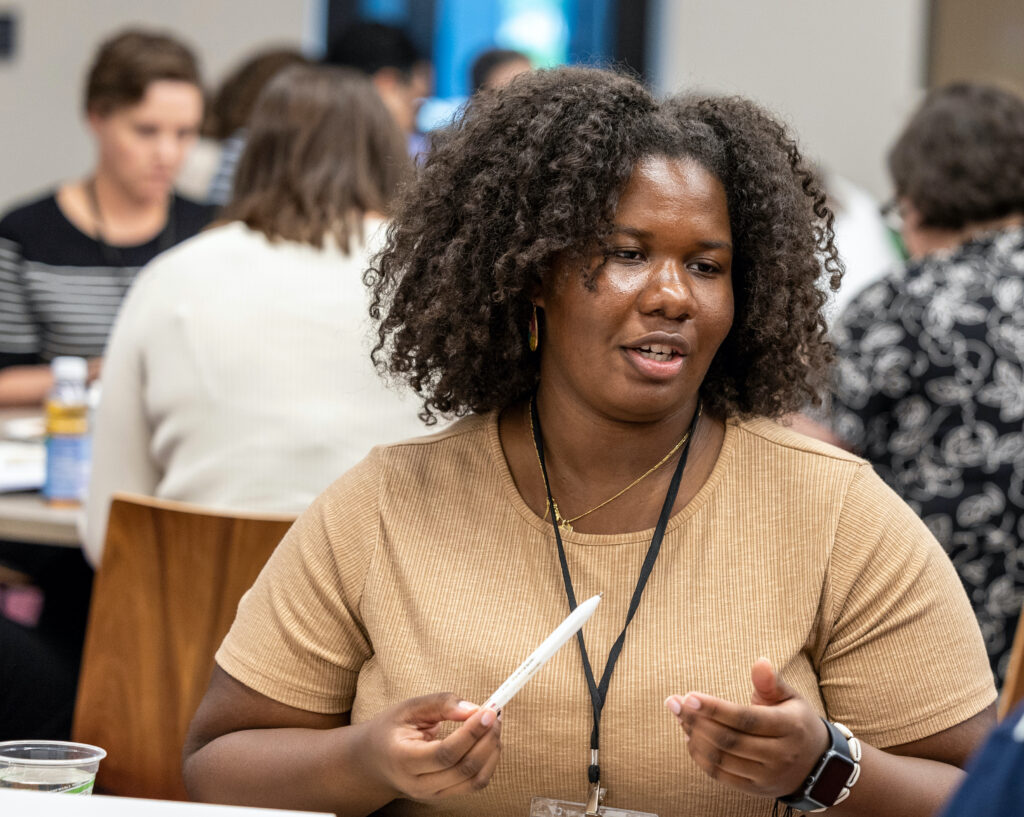
- Ebony Graham, Haverford College class of 2023, pictured above, and Khadijah Seay, Bryn Mawr College class of 2016, traveled to the Netherlands with Alison Cook-Sather to serve as experts at a two-day meeting focused on launching a pedagogical partnership work at The Hague University of Applied Sciences.
Co-Creation of Courses
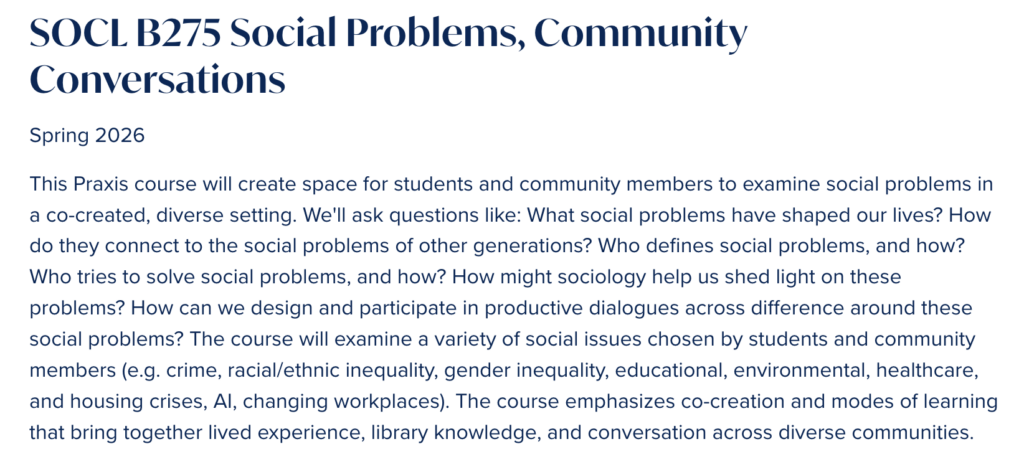
Students who work as consultants through Students as Learners and Teachers (SaLT) have opportunities to co-create courses with faculty, such as the sociology course described above. This particular instance of course co-creation was supported by two different institutions and led to related professional development opportunities:
- At “Belonging and Beyond,” a two-part workshop at Vassar College’s Institute for the Liberal Arts, the student-faculty pair, Austen Morris and David Sorge, conceptualized the plan for the course.
- Through a year-long, one-on-one pedagogical partnership through Students as Learners and Teachers (SaLT), Austen was paid as a co-planner, working closely with David.
- In an independent study completed with Alison Cook-Sather, Austen explored both course content and pedagogical approaches to integrate into the course she and David were co-planning.
- Austen and David worked in collaboration with staff of the Praxis Program at Bryn Mawr College, who helped coordinate a partnership with a community organization.
- Austen took advantage of an opportunity to present at the North Eastern Philosophy of Education Society conference, as Austen noted on LinkedIn.
- Inspired by all of this work, Austen wrote a reflective essay, “Cultivating Critical Hope: Reflections on Pedagogical Partnerships in Higher Education,” which is under review at International Journal for Students as Partners.
Grant-and Gift-Supported Work
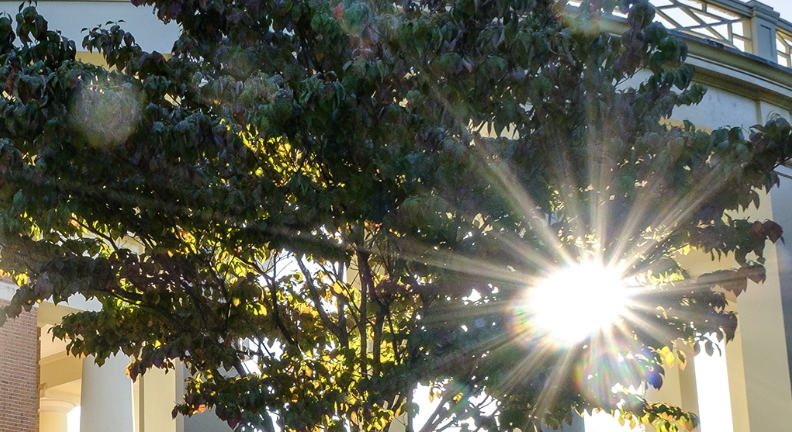
Alison Cook-Sather, the Teaching and Learning Institute, and Bryn Mawr College have received grants and gifts that create particular opportunities for student research and professional development. Below are three examples.
- “Teaching and Learning Character Together: A Partnership Approach to Preparing Students for Lives of Purpose.” An Educative Character Initiative (ECI) Institutional Impact Grant awarded to Alison Cook-Sather, Joel Schlosser (Political Science), and Jennefer Callaghen (Writing Program) is supporting faculty exploration of respect, open-mindedness, and courage in order to intentionally integrate development of these values into Bryn Mawr’s first-year thinking and writing program and into introductory-level general education courses across liberal arts disciplines.
- Student research opportunity: Funds from the grant support SaLT student consultants in participating in weekly meetings of the faculty pedagogy seminar, in co-facilitating pedagogy circles, and in writing about this work.
- “From Way of Working to Way of Being: Understanding Undergraduates’ Experiences of Pedagogical Partnership as a Calling,” a NetVUE grant awarded to Alison Cook-Sather, will support Alison in learn from graduates who worked in SaLT and SaLT-inspired partnership programs how those graduates have forged life pathways honoring the calling to pursue and foster relational ways of being, and offer recommendations for how higher education institutions can better support students in pursuing deeply relational ways of learning, growing, and being with others.
- Student research opportunity: Funds from the grant support two experienced SaLT student consultants—Shay O’Connor, Haverford College class of 2027, and Gongyu Yang, Bryn Mawr College class of 2027—in working with Alison to identify how student consultants name the calling inspired by pedagogical partnership work to pursue and foster relational ways of being.
- A gift from a donor is supporting the exploration of how ethics is conceptualized and taught in Bryn Mawr College courses.
- Student research opportunity: Funds from the gift are supporting Josie Cosentino, Bryn Mawr College class of 2026, to hold informal conversations with college faculty on how they conceptualize and teach ethics, to work in a focused SaLT partnership with one faculty member on these same themes, and to write an article about this work.
Scholarship and Publication
Students who participate in pedagogical partnerships through Students as Learners and Teachers (SaLT) have opportunities to publish reflective essays and research articles, both as solo authors and as co-authors, in a variety of venues dedicated to pedagogical partnership work:
- Teaching and Learning Together in Higher Education, a non-peer-reviewed, open-access journal, which has published reflective essays for over 15 years. Examples of themed issues that feature student consultant essays include:
- International Journal for Students as Partners, a peer-reviewed journal, that publishes in a range of genres:
- Cook-Sather, A., & Suresh, A. (2025). The language of pedagogical partnership: A cross-context analysis of student partner and program facilitator perspectives. International Journal for Students as Partners, 9(2), 9–28.
- Suresh, A., & Rolfes, P. (2023). Co-facilitating pedagogy circles for diversity, equity, and inclusion: Two student-partner experiences. International Journal for Students as Partners, 7(2), 209–216.
- Jonsson, M. . (2020). Five reasons why working as a student partner is energizing. International Journal for Students as Partners, 4(2), 150–154.
- Journal of Educational Innovation, Partnership and Change, a peer-reviewed journal featuring the work of students and staff as change agents.
- Wald, M. (2024). Resisting hierarchy and harm and centering humanity in higher education: A review of Co-creating Equitable Teaching and Learning: Structuring Student Voice into Higher Education. The Journal of Educational Innovation, Partnership and Change, 10(2).
- Cook-Sather, A., & Cott, M. (2024). Building individual confidence, responsive practices, and community for wellbeing : Insights from a review of reflective writing about co-creation. The Journal of Educational Innovation, Partnership and Change, 10(2).
- Cook-Sather, A., & Porte, O. (2017). Reviving humanity: Grasping within and beyond Our Reach. The Journal of Educational Innovation, Partnership and Change, 3(1), 299–302.
They also co-author research published in other venues, such as the following:
- Cook-Sather, A., Salmeron, D., & Smith, T. (2023). Centering humanism in STEM education through student-faculty pedagogical partnerships. Frontiers in Education, 8.
- Cook-Sather, A. & Nguyen, V. (2023). Using shared Google Docs to co-create life-affirming learning: A case of trauma-informed instructional design at the tertiary level. The Journal of Applied Instructional Design, 12(1).
- Marquis, E., de Bie, A., Cook-Sather, A., Krishna Prasad, S., Luqueño, L., & Ntem, A. (2021). “I saw a change”: Enhancing classroom equity through student-faculty pedagogical partnership. The Canadian Journal for the Scholarship of Teaching and Learning, 12(1).
- Cook-Sather, A., White, H., Aramburu, T., Samuels, C., & Wynkoop, P. (2021). Moving toward greater equity and inclusion in STEM through pedagogical partnership. In A. Beach, C. Henderson, N. Finkelstein, S. Simkins, G. Weaver, & K. White (Eds.) Transforming Institutions: Accelerating Systemic Change in Higher Education. ASCN.
- Cook-Sather, A., Signorini, A., Dorantes, S., Abuan, M., Covarrubias-Oregel, G., & Cribb, P. (2020). “I never realized…”: Shared outcomes of different student-faculty partnership approaches to assessing student learning experiences and evaluating faculty teaching. Journal of Higher Education Theory and Practice, 20, 7.
Post-Graduation Collaboration
Many projects begun while students are undergraduates continue after they graduate. These projects emerge from students having worked as SaLT student consultants, then moving into being co-planners and co-presenters at conferences, and often continuing as co-authors of articles, chapters, and books. For example:
- Truth telling and co-creation: A research opportunity that first took the form of a presentation at the conference of the American Association of Colleges & Universities became an article, “Structuring extra-classroom pedagogical partnership to support truth telling for equity and inclusion: Recommendations for practice,” after student co-presenter and co-author, Elena Marcovici, graduated from Haverford College. Elena also wrote the foreword and the chapter openings for Co-creation for Equity & Justice: Structuring Student Voice into Higher Education.
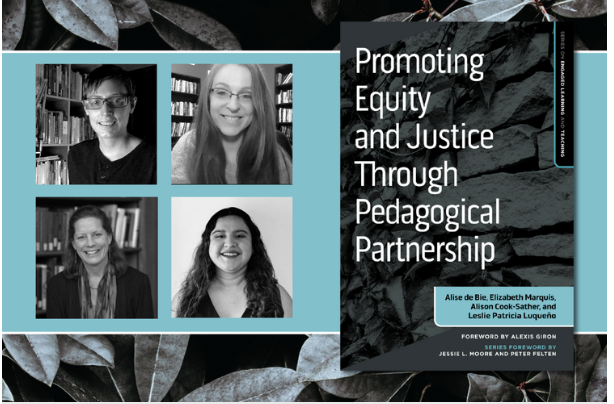
- Promoting Equity and Justice through Pedagogical Partnership. Pictured above, this book was begun while Leslie Patricia Luqueño was an undergraduate at Haverford College and continued to be revised and edited while she was a doctoral candidate at Stanford University, as she explains in “Learning to Honor My Own Epistemology: The Long-Term Effects of Student-Faculty Partnerships.”
- Pedagogical Partnerships: A How-To Guide for Faculty,
Students, and Academic Developers in Higher Education. Begun after one former SaLT student consultant, Melanie Bahti, had already graduated and while another SaLT student consultant, Anita Ntem, was still an undergraduate, this book took a couple of years to write and was published after Anita had also graduated.